


BBB A+ Accredited Business
Description
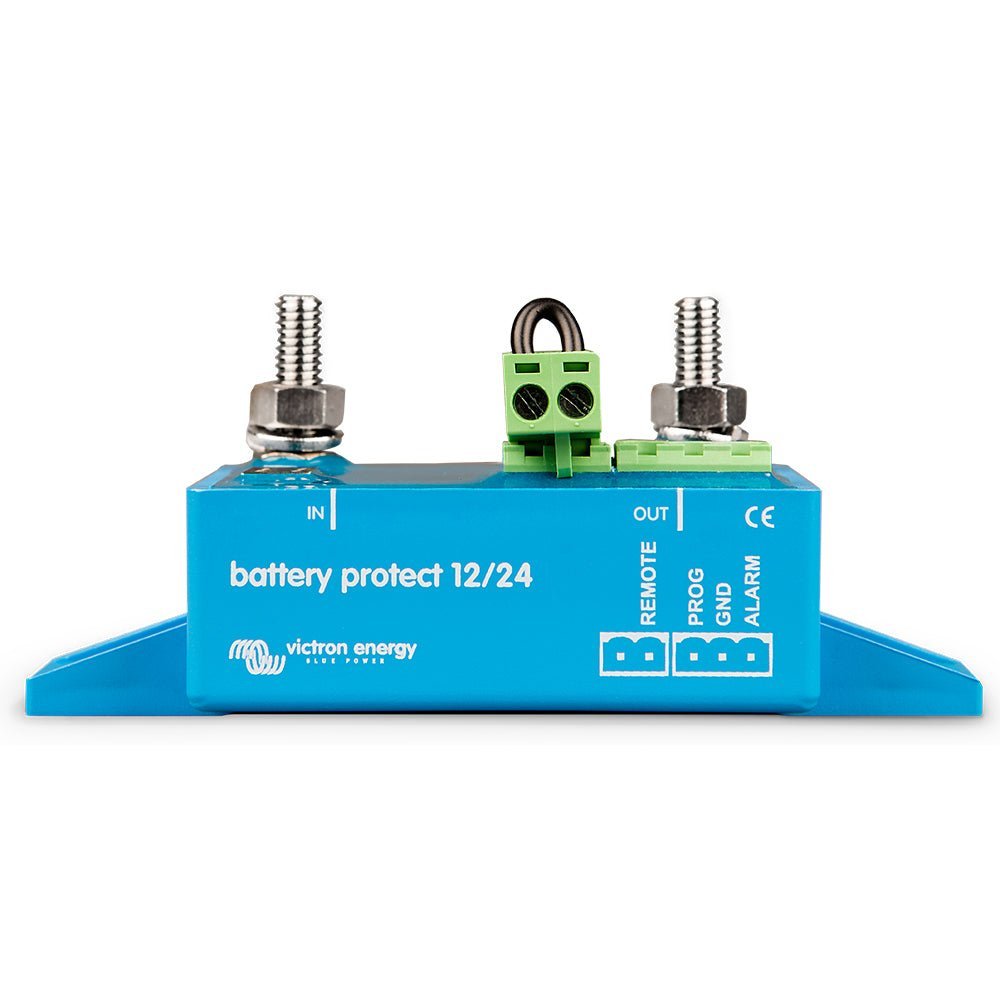
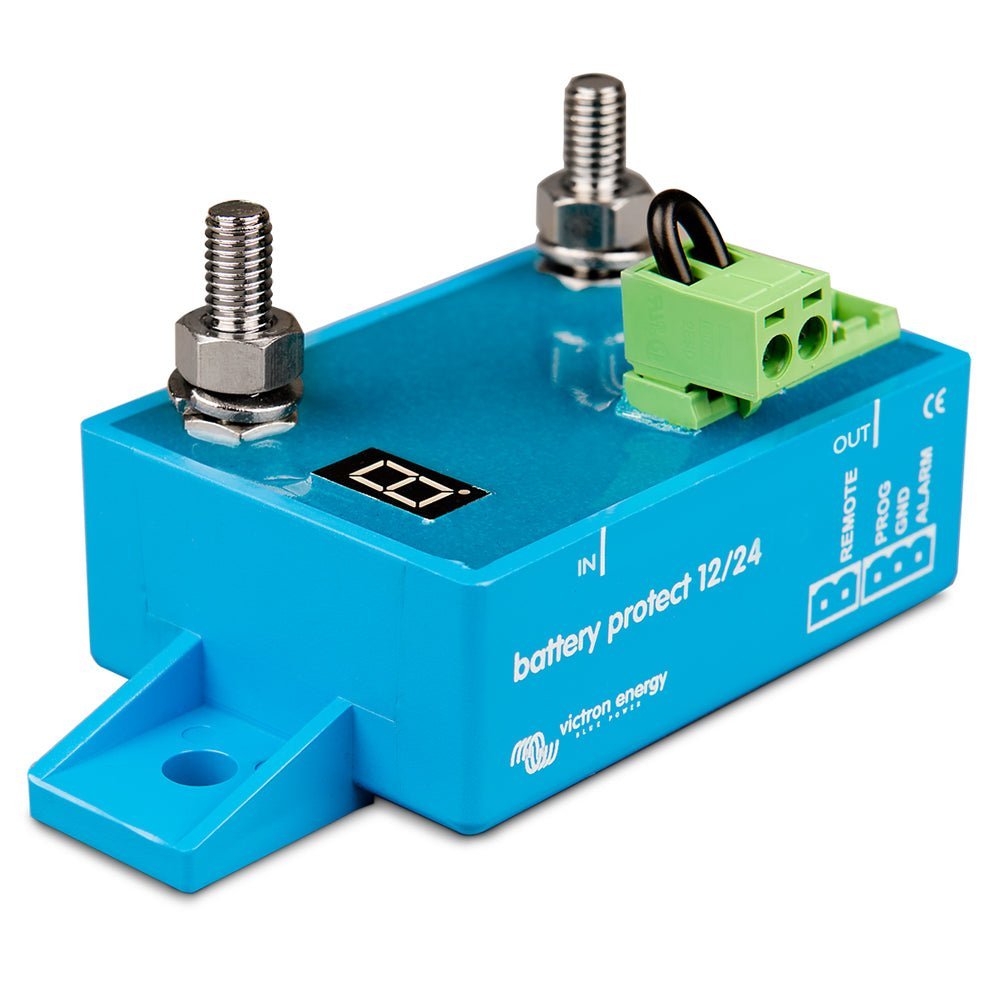
 The Victron BatteryProtect BP-65 is a 65A battery disconnect designed for 6–35 VDC systems, protecting battery health and essential electronics. It automatically isolates non-essential loads before deep discharge or when there’s not enough power to start the engine.
- Current rating: 65A disconnect for 6–35 VDC systems, safeguarding battery health while keeping critical electronics powered.
- Auto-ranging input: automatically detects 12V or 24V system voltage for effortless installation and reliable operation.
- Programmable thresholds: set engaging/disengaging voltages with a seven‑segment display showing the active setting.
- Li‑ion optimized mode: dedicated setting for Li‑ion batteries, controllable by VE.Bus BMS.
- Charge interrupter capability: can act between a charger and a Li‑ion battery to protect the pack.
- Ultra‑low standby current: minimizes drain on Li‑ion cells after shutdown.
- Over‑voltage protection: automatically disconnects loads if voltage exceeds 16V (12V systems) or 32V (24V systems).
- Ignition‑proof MOSFET switching: no relays and no sparks for safer, longer‑lasting operation.
- Delayed alarm and reconnection logic: alarm activates if voltage remains below threshold for 12 seconds; load disconnects 90 seconds after the alarm, and reconnects 30 seconds after voltage recovers.
- Versatile compatibility: ideal for automotive, marine, and off‑grid applications within 6–35 VDC.
- VE.Bus BMS integration: designed to work with VE.Bus BMS for Li‑ion configurations.
- Documentation and wiring: includes connection diagrams in the manual for straightforward wiring.
- Safety and compliance: Prop65 warning applicable; exposure to chemicals known to cause cancer or reproductive harm.
The BP‑65 protects battery life while ensuring critical systems stay powered. It maintains cranking power, supports Li‑ion configurations through VE‑Bus BMS, and provides clear, configurable thresholds. With ignition‑proof switching, delayed reconnection, and ultra‑low standby current, it offers reliable protection across automotive, marine, and off‑grid environments, even as battery conditions evolve.
Payment & Security
Your payment information is processed securely. We do not store credit card details nor have access to your credit card information.